Company Values

Format Feather proudly upholds the following company values:

Communicate often and well

Have fun

Provide value

Perfection, proficiency, efficiency

Build trust

Dedicated to high standards

Be transparent

Win together

Communicate often and well

Have fun

Provide value

Perfection, proficiency, efficiency

Build trust

Dedicated to high standards

Be transparent

Win together

Clear and Consistent Copyediting

The focus is on language clarity, sentence structure, and overall flow. This approach ensures that ideas are expressed smoothly and professionally. Ambiguity is eliminated, and consistency in tone and terminology is maintained throughout the document.

Accurate and Detail-Oriented Proofreading

A thorough review is conducted to correct grammar, punctuation, spelling, and typographical errors. The proofreading process ensures that academic writing is free from surface-level mistakes and distractions that can impact readability.

Professional Formatting for Academic Standards

Regardless of whether APA7, MLA, CMOS, Harvard, or IEEE is followed, or if a different referencing style is required by an academic discipline, documents will be formatted to meet the necessary specifications. This includes headings, references, in-text citations, spacing, page numbers, figures, tables, and layout.

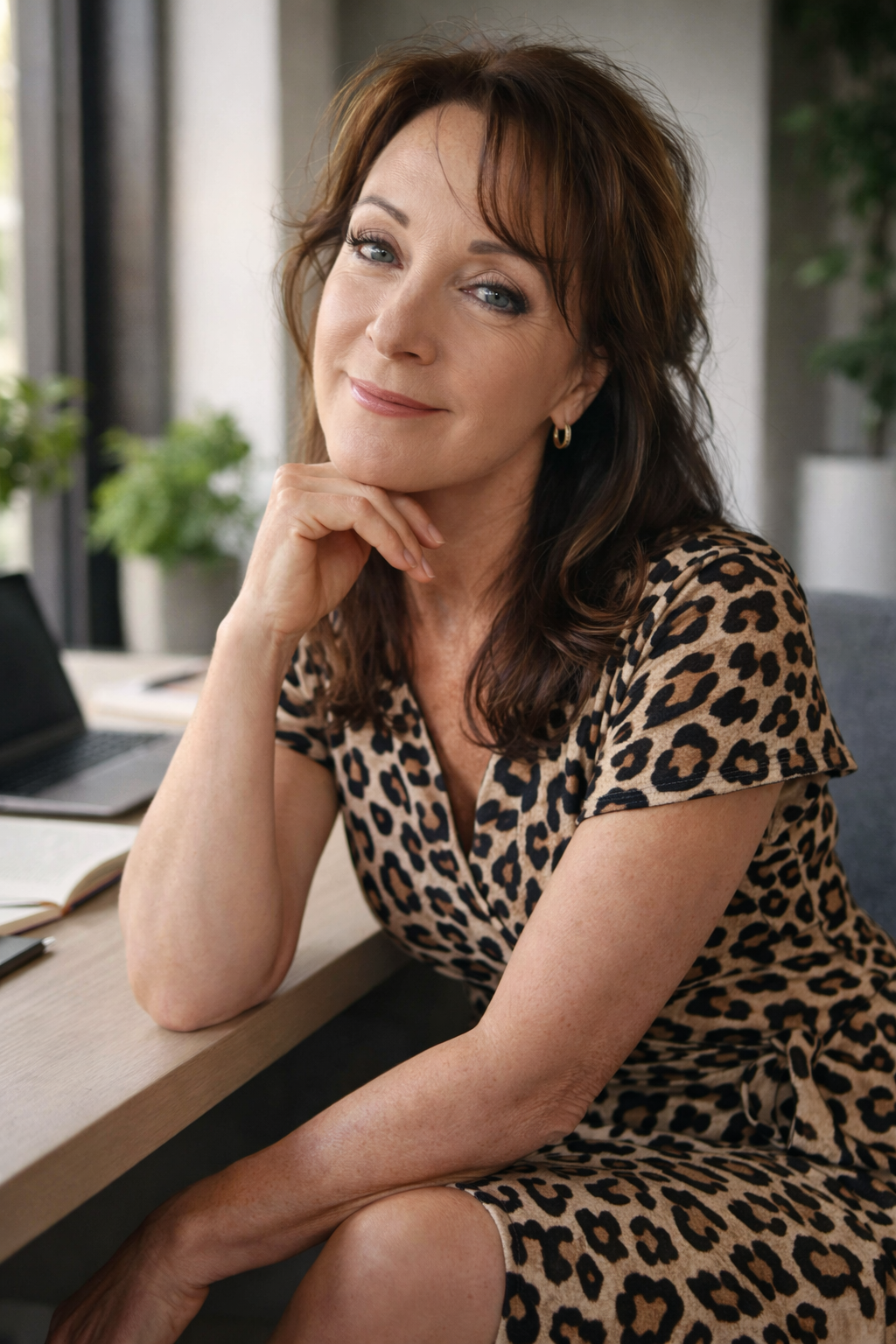
Ilsette Claassen
Copyeditor & Proofreader

Background

It all began with a brief word-processing course in the early 1980s, just as South African companies were becoming computer-literate, albeit without a mouse. This experience ignited my passion for the electronic side of business.

I enrolled part-time at UNISA and completed the National Diploma in IT (1998), with a focus on COBOL programming. This helped me grasp the logic behind computer codes and macros.

I have completed more relevant courses, among many others, as follows:

  • Editing Academic Text Diploma, University of Cape Town, 2025
  • Copyediting and proofreading Certificate, McGillivray Linnegar Associates (MLA), 2025
  • Become a Copy Editor & Proofreader Certificate, Udemy, 2023
  • Professional Communication and Office Management Certificate, University of Cape Town, 2018
  • Visual Basic 6 Software Programming Diploma, Hatfield Business College, 2001
  • Information Technology (IT) National Diploma, UNISA, 1998

My Experience

I am thankful for being able to love my work and do what I love. Every company or individual I’ve worked with has taught me something valuable, and I continually draw on this experience to improve my work.

I have significant experience in copyediting and proofreading (since 2000), primarily focusing on academic manuscripts.

Doctor of Philosophy in Public Policy

Doctor of Business Leadership

Doctor of Business Administration

Master of Business Administration (many)

Master of Educational Leadership and Management

Master of Sustainable Energy

Master of Engineering

Master of Arts in Economics

Honours Bachelor of Business Administration

Honours MSc Project Management

Honours MSc Technology Management

Research Proposals (many)


Non-academic experience (30+ years) in copyediting and proofreading involves:

Theological, reflective writing

Fiction

Non-fiction

Proofread all quarterly reports and corporate plans submitted to the Department of Minerals & Renewable Energy.

Expertly proofread and formatted several critical HR policies and procedures, which include

    • Remuneration Policy
    • Termination Policy
    • Terms and Conditions of Employment
    • Leave Policy
    • Rewards and Recognition Policy
    • Total Rewards Strategy

Proofread and formatted draft corporate documents and presentations.

What I Do

If you want, I can format your document without copyediting it, but I need to format it first.

The difference between light, medium and heavy copy-editing

A light copyedit (permitted for examinable work) is equivalent to a proofread, provided the text is good (competently written, with a good command of language, structure, and content).

A medium copyedit (permitted for examinable work) contains more mechanical errors (grammar, spelling, punctuation) and inconsistencies. Sometimes called copyediting or line-editing.

A heavy copyedit addresses mechanical errors, but content errors and structural issues (sentences, paragraphs, sections) will require much more substantial intervention. Sometimes called substantial editing.

The following is permitted in copy-editing examinable texts:

  • Ensuring clarity of expression and textual flow.
  • Reducing ambiguity, wordiness, and needless repetition, or drawing the author’s attention to them.
  • Introducing clear, logical connections between phrases, clauses, sentences, paragraphs, and sections.
  • Correcting errors of grammar, spelling and punctuation.
  • Ensuring the appropriate use of idiom, style and tone.
  • Making sure that technical and specialised terminology is used correctly, including discipline-specific terms, abbreviations and units of measurement.
  • Imposing consistency in the presentation of illustrations, diagrams and other display items.
  • Establishing consistency in basic formatting to meet style guide requirements (eg italics, bold, font size, and style).
  • Checking and correcting the reference list in accordance with the prescribed style (copy editors do not verify the accuracy of the bibliographic information).
  • Cross-checking the references (often an additional service) between text/notes and the reference list.
  • Commenting on layout, image captions, labels, and limited table formatting.
  • Copyediting includes proofreading and formatting.

Because theses and dissertations are for examination, I cannot ethically add anything new to them. I can only rearrange the author’s original text.

My proofreading services include checking to ensure that all the elements of the academic paper are complete, consistent and correctly placed, including checking as necessary:

  • completeness of all parts of the thesis,
  • correct use of grammar, spelling and punctuation,
  • consistency in the use of language, style, terminology, numbers, symbols, shortened forms, capitalisation, italics and other mechanics of text,
  • consistency in the presentation of illustrations and tables,
  • consistency in the format and layout according to the specified style (eg headings, font size, line spacing), and
  • conformity of references and citations to the specified style.

Proofreading applies to the near-final draft of a document.

Proofreading always follows copy-editing. If I am asked to proofread, the paper should already be edited.

A good first impression of a document (what it looks like) is as important as its content. A perfect layout – without any errors or typos – will make your audience take you seriously and want to read your work.

This is called technical editing, which requires a lot of conscientious nitpicking (otherwise referred to as ‘a search for excellence’ – or OCD!). My job is not finished until every ‘i’ has been dotted and every ‘t’ crossed.

I believe formatting should be completed before copy-editing, as it makes it much easier for me to work with the document. It looks professional and is much easier for examiners to navigate; this is a technical issue, not an academic one. 

HOW do I format an academic document?

Here is my checklist of the 14 steps I take:

  1. Save the original document under a new name as a template.
  2. Have the formatting style guide of the client’s institution handy, open to the page layout requirements.
  3. Switch off the Track Changes before formatting (the author does not need to approve compliance with institutional requirements).
  4. Set page size and margins.
  5. Set font.
  6. Set page numbering.
  7. Sweep 1. Apply headings.
  8. Sweep 2. Format figure captions.
  9. Sweep 3. Format table captions.
  10. Format tables of contents.
  11. Bookmark abbreviations and definitions.
  12. Cross-check references with in-text citations.
  13. Format tables.
  14. Check figure format.

Available as an optional add-on service after copy-editing

Service What’s included Price
Print Typesetting Professional interior layout for paperback or hardcover books. Includes page setup, margins and gutter, font and paragraph styling, headers/footers, page numbers, chapter openings, and a print-ready PDF. R8–R12
per final page
Ebook Formatting Clean, reflowable ebook file (EPUB / Kindle-compatible), including structured headings, paragraph styling, and a clickable table of contents. R1 200–
R2 000
Print + Ebook Package Print-ready PDF plus ebook file, prepared to platform specifications (e.g. Amazon KDP). From
R2 800
Complex Non-fiction Layout Layout for books with tables, footnotes/endnotes, images, call-out boxes, or multi-level headings. R15–R25
per page

Notes

  • Prices are based on the final, edited manuscript

  • Includes one round of layout corrections

  • Substantial text changes after typesetting may be charged separately

  • Formatting does not include content editing or proofreading

While I can point out issues related to the student’s attention, I am not permitted to make corrections to the content, substance, or structure of the work being examined.

I am also not responsible for identifying content-related problems, such as fact-checking, proper referencing, or plagiarism. However, if I do notice any such issues, I may suggest that the student review the university’s guidelines and seek assistance from their supervisor.


Upon receiving the initial payment (deposit) to secure my services, I begin the first edit. In this stage, I activate Track Changes and review the grammar, punctuation, spelling, logic, and overall flow. Since theses and dissertations are submitted for examination, I cannot ethically write any new content in them. My role is limited to rearranging your original text.

During the first round of editing, I usually have questions (noted as comments) that need your attention or suggestions that require your input. I also use comments to clarify any changes I’ve made. Once I finish this initial edit, I will return the document to you for your approval. After you review it, please send it back to me for a final check of the text and any modifications.

A second round of editing is often necessary because the document may appear significantly different after you make your changes and address any outstanding issues.

Once the editing is complete, I will send you my final invoice based on the original word count. After receiving the final payment, I will email you both the edited document and a PDF version.

Additionally, I will provide an editing certificate to highlight the professional quality of your work while ensuring that your unique voice shines through.

If any further updates are needed, I will make those revisions at no extra charge. For example, if your supervisor requests changes, I will update the Table of Contents before the final document is submitted.

Rates per Word

Level of edit

Rates

Academic

Non-fiction
Fiction
Poetry Corporate Government Textbooks
Light

R0.25

R0.32 R0.30 R0.39

R0.36

R0.40

Medium

R0.30

R0.42 R0.51 R0.50 R0.56

R0.45

Heavy

R0.36 R0.52 R0.62 R0.75 R0.61

R0.49


Per Page vs Per Word

I believe that a per-word rate is fairer than a per-page rate. A word rate excludes the space around figures and tables and accounts for variations in font and margin sizes.

Most universities specify that a thesis or dissertation should have 2.5 cm margins, 1.5 line spacing, and a font size of 11 pt Arial or 12 pt Times New Roman. I have used these specifications as the basis for my calculation, which equates one page to approximately 400 words.


Duration

How long does it take? Note that these can only be estimated.

It takes an average of an hour per page to copyedit and format. It generally takes

  • 10 hours to format 100 pages,
  • 70 hours to do the editing and proofreading,
  • 20 hours to check 100 references.

This is a total of 100 hours for a 100-page document with 100 references.